

Water Damage Restoration Cost in Walnut Creek, CA
Walnut Creek's winter rains bring seasonal flooding risk, particularly for properties near creek systems, and the cost to restore water damage depends entirely on what a local provider discovers during their inspection. Acting quickly to address water intrusion typically prevents damage from spreading deeper into structures and materials, which can significantly affect the scope and scale of restoration work required. Colwell Water Damage Restoration connects you with independent local providers in Walnut Creek who can assess your specific situation and explain what restoration will involve.
Water Damage Restoration Cost in Walnut Creek, CA
Walnut Creek property owners face a particular water damage risk from seasonal winter rains that can produce localized flash flooding and creek overflow, especially in areas near Walnut Creek and its tributaries. When water enters a home—whether through foundation seepage, storm runoff, or plumbing failure—the scope of restoration work and its associated cost depend on factors that begin the moment water stops flowing. Understanding what drives water damage restoration cost helps property owners make faster decisions when damage occurs, since the time between water intrusion and the start of drying work directly affects how much of the structure becomes involved in the restoration.
Colwell Water Damage Restoration connects Walnut Creek property owners with independent local restoration providers who assess the full extent of water damage and explain the cost factors specific to each situation. Whether damage affects a single room in Heather Farms or spreads across a larger area in Rossmoor or Ygnacio Valley, the independent provider will identify which materials absorbed water, how quickly drying must begin, and whether structural elements require removal and rebuilding. By reaching out promptly when water damage is discovered, property owners often keep the restoration scope—and its cost—from expanding further.
What Drives Water Damage Restoration Cost in Walnut Creek
Water Source Determines Scope
Clean water from a burst pipe costs less to restore than gray water from appliances or black water from sewage. Contamination level directly affects how materials are cleaned, replaced, or discarded, and which safety precautions the restoration provider must take.
Affected Area and Materials Matter
Restoration cost depends on square footage affected and what absorbed the water—drywall, carpet, hardwood, cabinetry, and insulation all dry and restore differently. Larger areas and porous materials require more labor, equipment, and time to dry completely and prevent long-term damage.
Drying Time and Equipment Needs
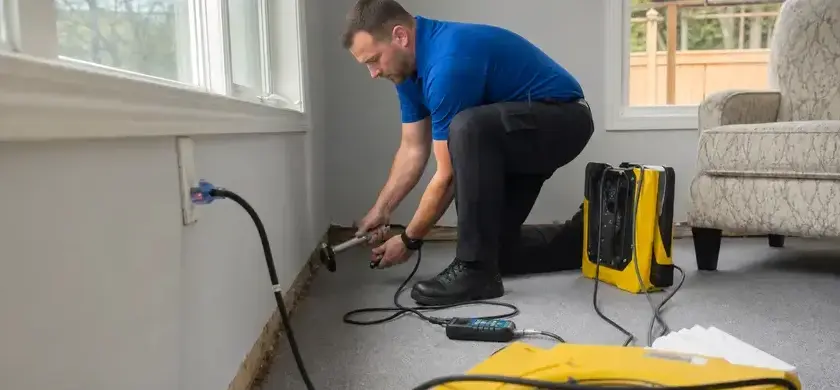
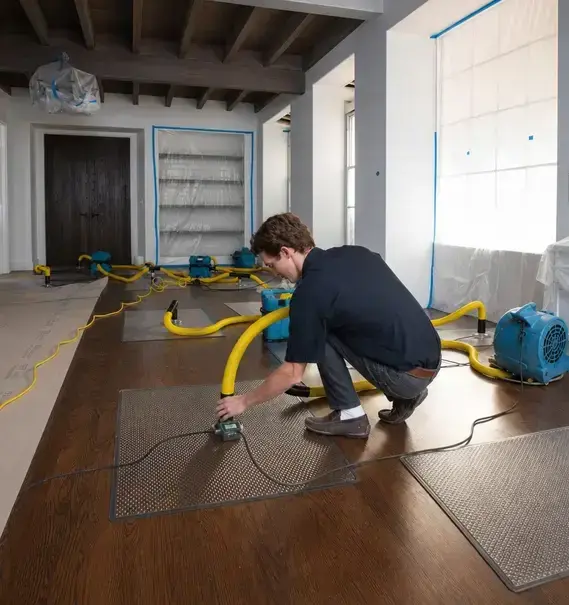
How long drying takes depends on humidity, temperature, ventilation, and material thickness. More equipment—dehumidifiers, air movers, moisture monitors—means higher labor and resource costs. Faster drying prevents secondary damage but requires investment in specialized tools.
Winter Flooding Adds Complexity Locally
Walnut Creek's heavy seasonal winter rainfall and creek overflow risk means properties in flood-prone areas like Heather Farms and Ygnacio Valley may face larger-scale water intrusion. Ground saturation and prolonged moisture exposure increase drying scope and rebuild needs, affecting overall restoration cost.
How Your Water Damage Restoration Cost Is Estimated in Walnut Creek, CA
From your first call to the final invoice, the goal is simple: understand what is driving Water Damage Restoration Cost for your property before any work begins.
Request an On-Site Estimate
Call Colwell Water Damage Restoration to describe what happened and where water entered your Walnut Creek home. The independent local provider you're connected with will schedule an inspection to assess the full scope of water damage restoration work—including which surfaces absorbed water, how long moisture has been present, and what category of water is involved—so they can estimate the actual cost.
Get a Detailed Scope and Cost Breakdown
The provider inspects affected areas to determine what water damage restoration will require: the volume of wet materials, drying time needed, equipment rental costs, and whether structural removal (drywall, flooring, cabinets) is necessary. The estimate reflects these specific factors driving your water damage restoration cost, plus any mold remediation if growth has begun.
Review the Estimate Before Work Begins
You receive a detailed estimate showing exactly what water damage restoration includes and its cost. Review it with the provider, ask about any line items, and decide whether to move forward—nothing starts until you approve the scope and cost for your Walnut Creek water damage restoration.
Wondering about Water Damage Restoration Cost in Walnut Creek? Get an on-site estimate from a local provider.
Call Now — (925) 886-2224Water Damage Restoration Cost Drivers in Walnut Creek
Water damage restoration cost in Walnut Creek depends directly on what gets wet, how much of your property is affected, and how quickly the work begins. The seasonal winter rains and creek overflow risk that affects much of the area means many properties face potential water intrusion—and the earlier a restoration provider responds, the smaller the scope of work typically remains. Cost scales with the category of water involved: clean water from a burst pipe or roof leak costs less to manage than gray water from appliances, which costs less than black water from sewage or flooded creeks. A provider will assess which materials absorbed water—drywall, subflooring, insulation, cabinetry, and structural framing all affect the final cost because some must be removed and replaced rather than dried in place.
The amount of drying time and equipment required also drives cost upward. A large wet area or one with high moisture trapped in walls and under flooring demands more industrial dehumidifiers, air movers, and monitoring days than a small, contained spill. If mold growth has begun before the restoration provider arrives, the scope expands significantly. Because most Walnut Creek homes sit on concrete slab foundations, water pooling beneath the surface or wicking into adjacent materials can extend drying needs and add cost. Calling a local restoration provider immediately after damage occurs gives them the best chance to limit the extent of removal and rebuilding required—making speed one of the most important factors in what you will ultimately owe.
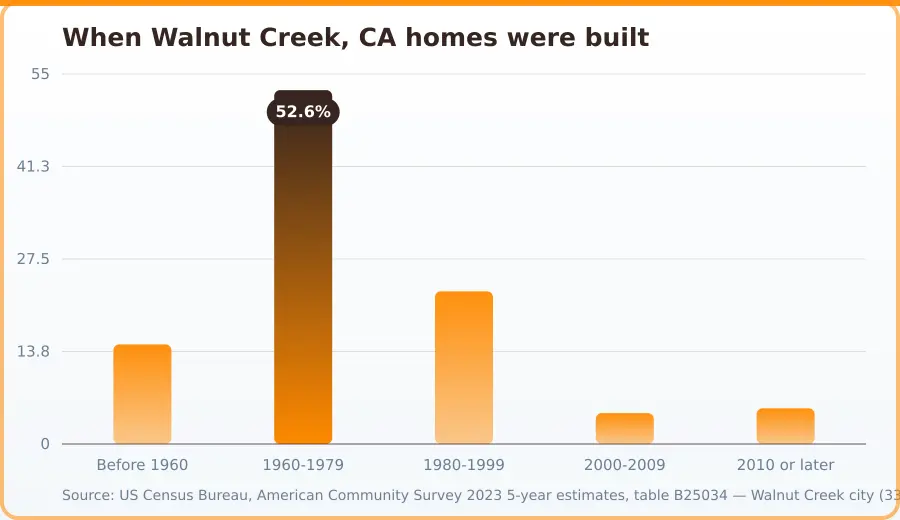
| Period | When homes were built (%) |
|---|---|
| Before 1960 | 14.8 |
| 1960-1979 | 52.6 |
| 1980-1999 | 22.7 |
| 2000-2009 | 4.6 |
| 2010 or later | 5.3 |
Source: US Census Bureau, American Community Survey 2023 5-year estimates, table B25034 — Walnut Creek city (33,618 housing units). Retrieved October 4, 2026.
Seasonal Water Damage Restoration Cost Drivers in Walnut Creek
Winter: Flood and Overflow
Heavy seasonal rain in Walnut Creek's winter months drives localized creek overflow and flash flooding, particularly near Walnut Creek and its tributaries. Water damage from flooding into homes built on concrete slab foundations can involve large volumes of water crossing multiple rooms, requiring extensive drying equipment and material removal, which significantly increases restoration scope and cost.
Spring: Lingering Moisture
As winter rains taper and temperatures rise, wet materials in walls, subflooring, and framing may still be drying or beginning to show mold growth. Restoration costs climb when water has remained hidden for weeks, because the scope expands from water removal to include structural material replacement and mold remediation alongside standard drying.
Summer: Heat-Driven Drying Costs
Warm, dry conditions can speed evaporation naturally, but water damage discovered after weeks of summer heat may already involve mold, material degradation, or pest activity. Restoration costs depend heavily on how long water sat before detection—early action keeps drying time and equipment needs down, while delayed discovery often requires demolition and rebuilding of affected surfaces.
Fall: Seasonal Temperature Swings
Cooling nights and inconsistent humidity in fall can slow natural drying and trap moisture in wall cavities and subflooring. Restoration costs rise when temperature fluctuations allow condensation to reset drying progress, forcing providers to run dehumidification and air-movement equipment longer and sometimes remove and replace materials that were already partially dry.
Homeowner Safety Toolkit
Verify Your Walnut Creek, CA Water Damage Restoration Company
Before you hire anyone, use these independent national resources to confirm credentials, standards, and track record.
RIA
A national trade association whose member companies agree to a written code of ethics covering honest estimates, safety, and fair billing.
Code of EthicsBBB
Look up any restoration company's complaint history, customer reviews, and accreditation status — a free, independent check before you hire.
Check StandingIICRC
Sets the technical standards for water damage restoration. Confirm a company's technicians hold real, current IICRC certification before you hire them.
Verify CertificationWater Damage Restoration Cost FAQs — Walnut Creek, CA
The primary cost drivers include the category of water involved, the area and materials affected, how long drying takes, and whether structural rebuild is needed. Clean water costs less to restore than contaminated water. Damage to drywall, flooring, and insulation increases costs. Longer drying periods raise labor and equipment expenses. Extensive structural damage requires more extensive remediation work.
Prompt response limits the spread of water to unaffected materials and reduces secondary damage like mold growth and structural deterioration. The longer water sits, the more areas require restoration and the more time equipment must run. Early intervention often means less extensive drying, fewer materials to replace, and lower overall restoration cost.
A local restoration provider inspects your property to assess water category, affected materials, square footage, moisture levels, and drying requirements. Based on this on-site evaluation, they develop an itemized estimate for the work needed. Estimates reflect regional labor rates and local material availability. The inspection-first approach ensures your cost reflects your specific damage, not a generic quote.
Insurance coverage varies by policy and may help offset restoration expenses, though coverage depends on the cause of damage and your specific policy terms. Some water damage is covered; others are excluded. Contact your insurance provider early to understand your coverage. The restoration provider can help document damage for your claim, but coverage decisions rest with your insurer.
Colwell links you with independent local restoration providers who can typically schedule an on-site assessment quickly, even for urgent water damage situations. Local providers respond faster than distant companies and can begin damage evaluation and cost estimation promptly. Contact Colwell as soon as water damage occurs to get connected without delay.
Heavy seasonal rainfall and localized flooding from creek overflow increase water damage risk in the Walnut Creek area during winter months. When flooding events occur, restoration demand rises, which can affect scheduling and the scope of work needed. Properties in flood-prone areas may face higher restoration costs due to more extensive water intrusion and longer drying times after seasonal weather events.
Questions about Water Damage Restoration Cost in Walnut Creek, CA? Call (925) 886-2224 to arrange a local on-site estimate.
Call Now — (925) 886-2224Areas We Serve Near Walnut Creek, California
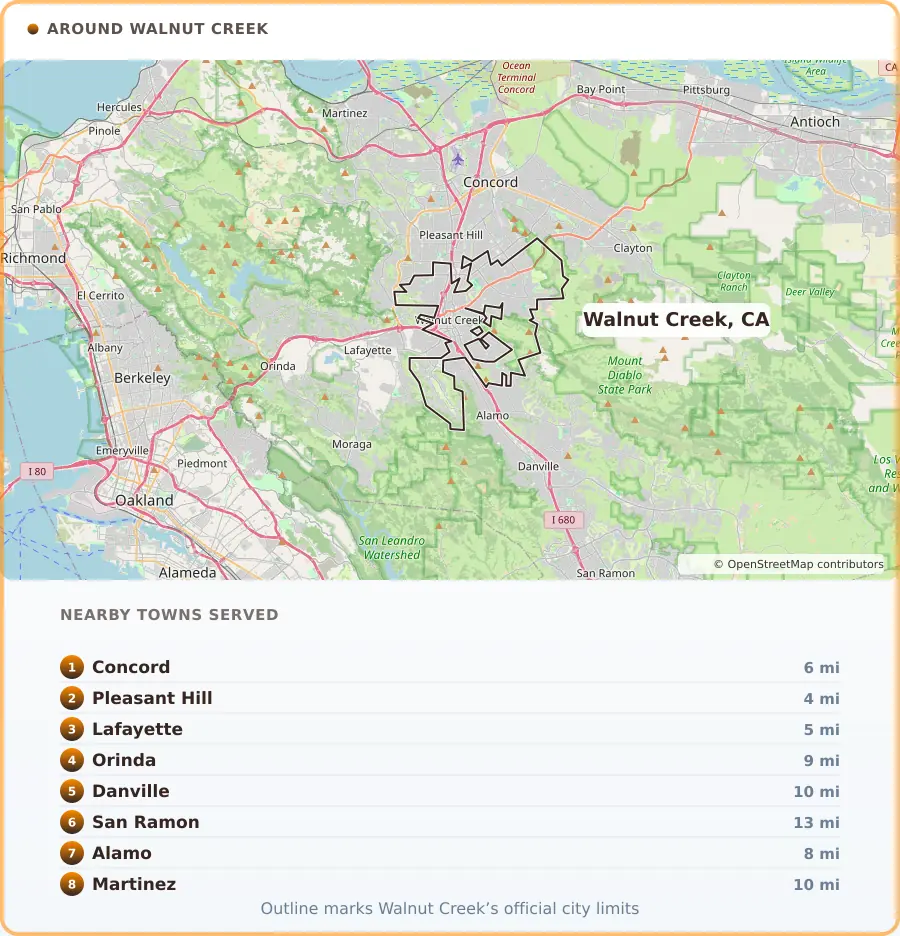
Based in Walnut Creek, CA, with 8 nearby communities inside the service area — near enough to reach quickly, not just listed on a map.
Walnut Creek, CA Information
Tucked into the East Bay of Contra Costa County, Walnut Creek has grown into a true regional hub, home to roughly 70,000 residents while drawing commuters and visitors from across the surrounding valleys each day. Healthcare anchors much of its economy, with John Muir Health and Kaiser Permanente Walnut Creek Medical Center among the city's largest employers, while a walkable downtown built around Broadway Plaza keeps retail, dining, and professional services thriving. BART access ties it neatly into the wider Bay Area.
Beyond the commercial core, the city carries a distinctly residential, neighborly feel, from the quiet streets of Parkmead to the rolling hillsides near Heather Farms. Corporate offices, finance firms, and civic institutions like the County of Contra Costa round out a local economy that feels both business-savvy and genuinely livable.
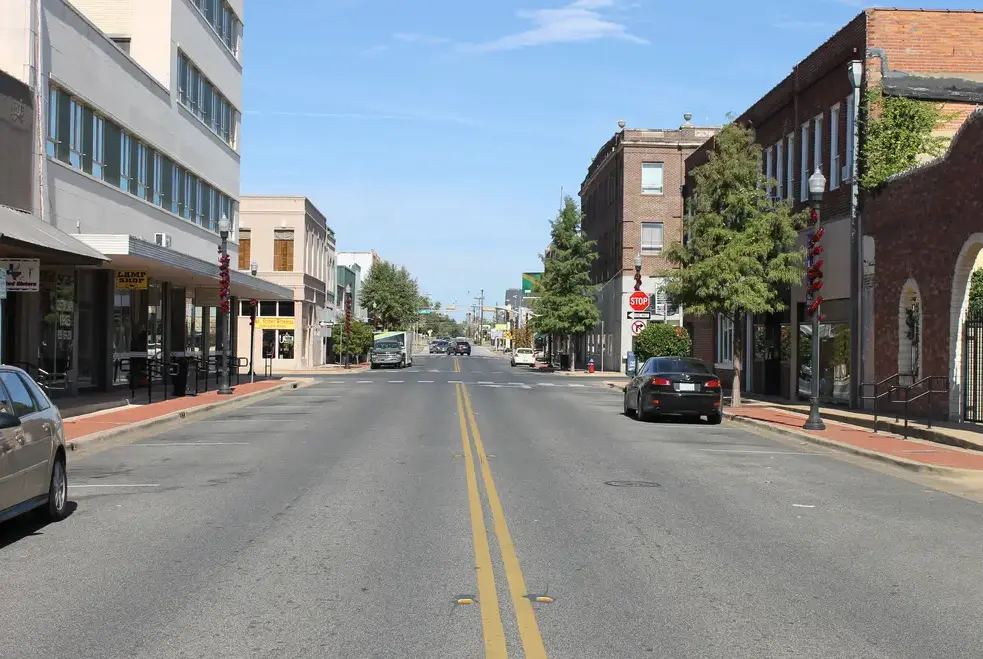
Photo: Billy Hathorn, CC BY-SA 3.0